May 28th, 2009 | Tags: , ,

Occasionally I am asked this question, okay maybe the person asking does not know about Exchange (disgrace I know!), however my answer previously would be no, unless you pay. But now there are all kinds of options available, personally I have tried the Microsoft Office Outlook Connector for Outlook 2003/2007 and been extremely impressed.

This allow “Exchange-like” access to your Windows Live Hotmail, contacts, e-mail and calendar with 5 gigabytes of storage too!

For more information and download go here

May 28th, 2009 | Tags:

High level features include:

New Windows Server and Client Version Support

·       Integration with Windows Server® 2008 R2

·       Support for the BranchCache feature on Windows Server 2008 R2

·       Support for Windows 7 client

WSUS Feature Improvements

Auto-Approval Rules

·       Auto-approval rules now include the ability to specify the approval deadline date and time for all computers or specific computer groups.

Update Files and Languages

·       Improved handling of language selection for downstream servers includes a new warning dialog that appears when you decide to download updates only for specified languages.

Easy Upgrade

·       WSUS 3.0 SP2 can be installed as an in-place upgrade from earlier versions of WSUS and will preserve all of your settings and approvals. The user interface is compatible between WSUS 3.0 SP1 and SP2 on the client and the server.

Reports

·       New Update and Computer Status reports provide the ability to filter on updates approved for installation. You can run these reports from the WSUS console or use the API to incorporate this functionality into your own reports.

Software Updates

·       Stability and reliability fixes for the WSUS server, such as support for IPV6 addresses greater than 40 characters.

·       The approval dialog now sorts computer groups alphabetically by group name.

·       Computer status report sorting icons are now functional in x64 environments.

·       Fixed setup issues with database servers running Microsoft® SQL Server® 2008.

·       A new release of Windows Update Agent is included with WSUS 3.0 SP2 that provides improvements and fixes, such as support for APIs called by non-local system callers in a non-interactive session.

Source and RC registration: here

May 28th, 2009 | Tags:

If you are developing an OCS enlightened application the MS Communications Server Team want to hear from you. Head here for more information.

P.S. If anyone has developed an application that recognises numbers in e-mails etc. for click-to-call purposes, let me know!

May 27th, 2009 | Tags: ,

Enda over at Microsoft TechNet Ireland just announced a great event on June 14th, this will focus mainly on Exchange 2010 with a little Office Communications Server 2007 R2 of course, Nathan Winters will be speaking and I from my own experience has an excellent insight into the Exchange platform.

Details below:

On June 12th the Windows User Group will be running a session on Exchange 2010, also known as Exchange 14. The speaker, Nathan Winters, is an Exchange MVP, consultant and author with huge experience and a growing international reputation. As you can see from the session agenda, the world of email has evolved into a world of communications and collaboration, introducing many new technologies and offering new ways to access existing technologies with solutions for the major corporates and the small businesses. This will be an interesting session that will explain what’s happening now and in the near future.

WUG    ExchangeSvr2010_v_c

Agenda

  • Introduction: Nathan will discuss the history of email with a particular focus on Exchange, this sets up the rest of the presentation which is about the future of email (Microsoft Style!)
  • Software + Services: Whether this is the future or not, what Microsoft is doing, the BPOS suite, limitations, benefits, and customers who have used it. Nathan will also show a demo. He will touch on Exchange Lab@Edu which leads into Exchange 2010 – Approx 20 mins
  • Exchange 2010 will be the main section of the presentation: The basics (roles, prerequisites etc). Nathan will take a look at the aims of the product group and dive into depth around the new features related to each of the roles
  • A brief intro to Unified Communications: This section will give a very brief intro to Office Communications Server 2007 R2 and then end with a demo of some key work scenarios and features
  • Summary and Questions

Live Webcast

We will be using LiveMeeting to share this presentation live to the world!  You can sign in here using this code: https://www.livemeeting.com/cc/usergroups/join?id=46G74S&role=attend

Please use the free installed client instead of the web client.  The web client has issues regarding audio sharing.

About Nathan Winters

Nathan Winters is a Lead Consultant for Dimension Data. He is responsible for the Microsoft Exchange practice in the UK. Nathan has been working in I.T. for six years and specializes in Exchange and Office Communications Server.

Midway through 2006 Nathan founded the Microsoft Messaging and Mobility User Group UK which holds regular meetings in the UK to discuss topics related to Exchange. In April 2007 Nathan was awarded an MVP (Exchange Server) for his work with MMMUG and regular contributions to the Mark Minasi Forum. Nathan is a regular contributor to the MSExchange.org website and Nathan’s other articles have been published by Penton Media (Exchange and Outlook Administrator newsletter), Microsoft (TechNet Industry Insiders) and on the MMMUG website

Registration

Anyone wishing to attend the event should register.  This event is being held in Microsoft so registration is mandatory.  As usual, there is no cost associated with this event.

Source: here 

May 27th, 2009 | Tags: ,

Last weekend my father in-law asked me if it was safe for him to throw away an old computer, as an ex-practicing solicitor his level of paranoia is heightened when it comes to information security.

I found out that he had been storing his old computer(s) for over 12 years as he didn’t want to risk his own data being recovered and falling into the wrong hands. Whilst this is exemplary display of information security it is probably not the most convenient way of avoiding information leakage!

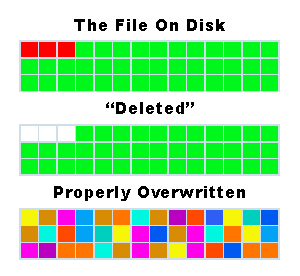
What most of us don’t understand is that when you delete a file it changes a marker that identifies it as free space that could be overwritten, without actually overwriting the file in question it is easily recoverable. I explained to him that by using (with my assistance) simple freeware software like Darik’s Boot and Nuke he could throw away his old 8gb hard drive without a worry in the world.

The other alternative is hard drive shredding, see my previous post here

The Office Communications Server codec (RTAudio), is known for being capable of handling network issues and the avoidance of “jitter”. In my experience I would have to say in most cases this is true, however for a large-scale deployments that utilise modern day MPLS networks QoS (Quality of Service)  or CoS (Class of Service) are recommended.

Most MPLS networks rely upon DSCP (DiffServ Code Point), a field in the header of IP packets used for classification – in this case to prioritise and ensure call clarity.

Assuming you have already confirmed with your WAN vendor (in my case BT) that DSCP traffic priorities are configured and the appropriate allocation of bandwidth is assigned you next need to get tagging!

To classify all voice traffic you need to configure both clients (where voice originates) and servers (where voice terminates) to generate DSCP markings. For documentation on this review this excellent article over at TechNet.